
By Tony Harte | 36+ Years Sober | Addiction Recovery Specialist.
Key Takeaways: Sobriety Fatigue
- It’s Not Relapse: Feeling exhausted by recovery isn’t a sign of failure; it’s a sign of sustained effort.
- The “Middle Stretch”: Burnout often happens after the “pink cloud” fades but before long-term serenity sets in.
- Stoic Endurance: Marcus Aurelius teaches us that we don’t control the fatigue, only our response to it.
- Action Plan: It is safe to audit your routine and “scale back” to the basics to protect your sanity.
Sobriety Fatigue: When Staying Sober Just Feels Exhausting
Sobriety Fatigue is the state of mental and emotional exhaustion resulting from the constant decision-making required to maintain recovery.
There’s a moment—maybe six months in, maybe six years—when we wake up and the idea of doing this one more day makes us want to crawl back under the covers.
Not because we want to drink. Not even because we’re craving. Just because we’re tired.
Sobriety fatigue isn’t about wanting to relapse. It’s about being worn down by the sheer maintenance of staying clean. The meetings. The check-ins. The constant self-monitoring. The emotional labor of showing up as the “sober version” of yourself when that version still feels like borrowed clothes.
As we get worn down, we start to suffer from decision fatigue. Saying “no” to a drink 50 times a day consumes glucose and willpower, which is why the fatigue occurs. When we suffer from decision fatigue we typically make “auto-pilot” decisions or the ones that cause the least resistance.
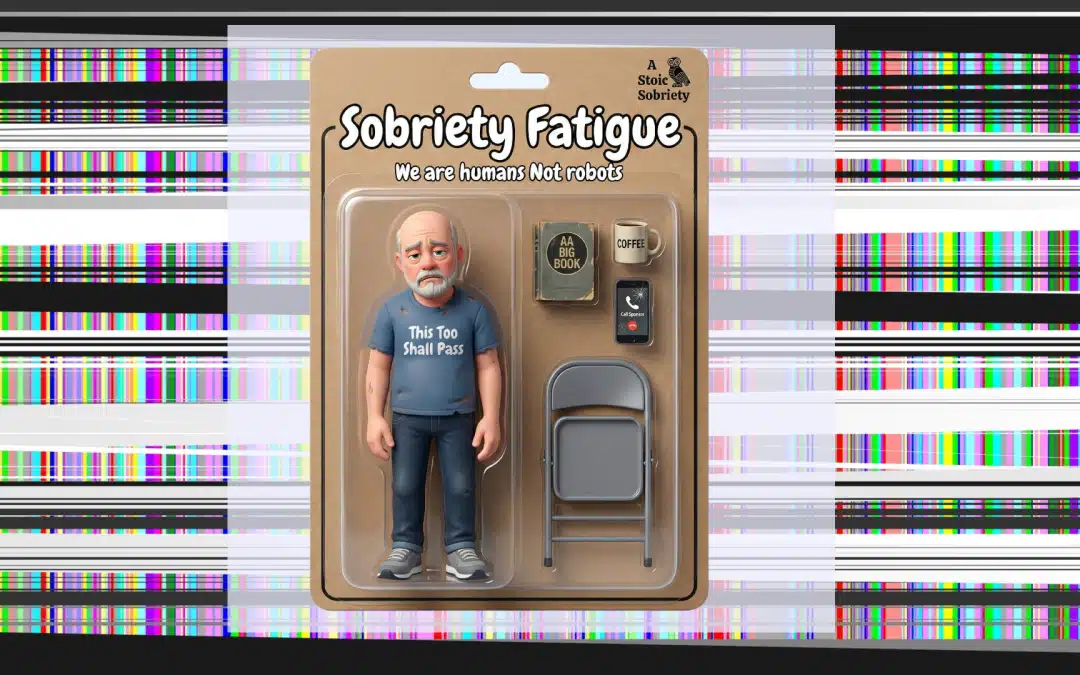
Not having the energy to make good decisions when we are experiencing sobriety fatigue adds one more hurdle to overcoming it. Nobody warned us about this part. The sustained effort required to stay sober is significant. We are humans, not robots.
If you are experiencing sobriety fatigue, hear this loud and clear: It is not a failure on your part. It is simply part of the process.
What Are the Symptoms of Sobriety Fatigue?
Sobriety fatigue is the accumulated exhaustion of recovery work. It’s decision fatigue meets emotional depletion meets the realization that being sober doesn’t mean we’re fixed—it just means we’re dealing with life without our old numbing agent.
In my 34 years around the rooms, I’ve seen it show up like this:
Skipping meetings we used to never miss.
Feeling resentful when people celebrate our sobriety milestones.
Going through the motions but feeling hollow inside.
Irritability that has nothing to do with cravings.
The sense that we’re maintaining rather than growing.
People mistake it for relapse risk. Sometimes it is. But more often? It’s just what happens when we’ve been white-knuckling our way through existence for months or years, and our nervous system finally says, “I need a break.”
The tricky part: we can’t take a break from being sober. But we can take a break from the performance of sobriety.
Why People Don’t Talk About Recovery Burnout
Recovery culture loves the redemption arc. We celebrate day counts, chips, and anniversaries. We talk about pink clouds, spiritual awakenings, and transformed lives. All of that’s real.
But we’re weirdly quiet about the middle stretch.
The part where we’re not newly sober and buzzing with relief, but we’re also not ten years in with that hard-won serenity. We’re just… here. Sober. Tired. Wondering why it still feels this hard.
There’s shame in admitting we’re exhausted by the thing that saved our life. We suffer alone. We think something’s wrong with us because we’re not glowing with gratitude every day. We feel guilty for being tired when we “should” just be grateful we aren’t dead or in jail.
Here’s the brass tacks: Sobriety fatigue doesn’t mean we’re ungrateful. It means we’re human.
The Risks: Relapse and Emotional Depletion
When we ignore sobriety fatigue, it compounds. We start running on fumes, showing up to meetings out of obligation rather than need, checking boxes just to say we did. The spiritual component dries up first—prayer feels rote, meditation feels like another damn chore.
Then the social stuff starts to fray. We get snippy with our sponsor. We bail on coffee with our recovery friends.
The danger isn’t that we’ll suddenly decide to drink. The danger is that we’ll slowly drift away from the supports that keep us stable. One day we’ll realize we’re isolated, resentful, and running on empty. That’s when the drink or drug starts looking less like a terrible idea and more like a vacation.
Sobriety fatigue kills people. Just slowly.
Applying Stoic Hypomone (Endurance) to Recovery
Marcus Aurelius spent years fighting wars on the frontier of the Roman Empire. Freezing in camps, endless battles, plague running through his troops. He didn’t write about grand victories in his Meditations—he wrote about getting through the day. About doing what needed doing, even when everything in him wanted to quit.
“You have power over your mind—not outside events. Realize this, and you will find strength.” — Marcus Aurelius
That’s not a motivational poster. That’s a guy reminding himself that he controls his response, not the circumstances. He can’t make the war end, but he can choose how he meets the next moment.
Sobriety fatigue is our war on the frontier. We can’t make it stop being hard. We can’t force ourselves to feel energized about recovery when we’re running on empty. But we can adjust how we’re carrying the weight.
Epictetus taught that some things are up to us and some things aren’t.
Do we feel exhausted? Not up to us.
Do we use that exhaustion as information to adjust our approach? Completely up to us.
The Stoics weren’t about grinding through suffering for its own sake. They were about recognizing what we can actually control and working with reality as it is, not as we wish it were.
| Stoic Concept | Core Principle | Recovery Application | Result |
|---|---|---|---|
| The Dichotomy of Control | Focus only on your own actions | Stop trying to "fix" the past or control others' opinions | Preserves mental energy |
| Hypomone (Endurance) | Staying power under pressure | Viewing cravings as external weather to be weathered | Reduces panic & relapse risk |
| The View From Above | Objective perspective | Realizing this fatigue is temporary and universal | Eliminates self-pity |
| Amor Fati | Love of one's fate | Embracing the exhaustion as part of the healing process | Transforms pain into purpose |
3 Actionable Steps to Overcome Sobriety Fatigue
First—and this feels counterintuitive—we have to stop treating sobriety fatigue like a character flaw. It’s a sign we’ve been carrying a heavy load for a long time, and we need to set some of it down.
1. Audit Your Maintenance
What are we actually maintaining right now? Daily meetings, therapy, sponsor calls, service commitments, reading, journaling, exercise, family obligations, work stress. Write it down. Look at it.
Now ask: What would happen if I did less?
People in recovery are terrified to scale back. We think reducing our program means we’re getting complacent. Sometimes that’s true. But sometimes we’re just burning out on a schedule that was necessary at 30 days but isn’t sustainable at 500.
2. Change the Scenery
Change something. Not our sobriety—change our routine. Different meeting. Different time of day. Different people. The human brain craves novelty, and recovery can become numbingly repetitive. That 7 AM Tuesday meeting we’ve been hitting for two years? Maybe it’s time to try Thursday night across town.
3. Stop Performing Gratitude
You know what I mean. The rehearsed shares where we list all the things we’re grateful for because that’s what you’re supposed to say. The performance of being the “Good Sober Person.”
We don’t have to be grateful every day. Some days we can just be sober and irritated about it. That’s fine. Gratitude that’s forced becomes another weight to carry.
Also, while “fake it til you make it” is useful in early sobriety, in later sobriety, it becomes dishonesty. Being honest with ourselves and others about where our head is will always be a keystone of recovery.
4. Talk to Someone Who Won’t “Fix” It
Find someone who can sit with “Yeah, this is f*cking exhausting sometimes” without needing to make it better. That might be your sponsor, a friend, or a therapist. Whoever it is, they need to have the capacity to hear that we’re tired without panicking that we’re about to relapse.
Seneca reminds us that we suffer more from imagination than reality. When we talk about it, we inject reality into our imagination.
The Part People Argue With
“But if I scale back my program, won’t I relapse?”
Maybe. But you know what else causes relapse? Burning out so completely that we drift away from recovery without even noticing until we’re standing in a bar.
A marathon runner who tries to sprint every mile doesn’t finish the race—they blow out their knees at mile eight. We’re allowed to pace ourselves.
This Isn’t Forever
Here’s what nobody tells us: Sobriety fatigue comes in waves.
Maybe we’re in one now. We won’t be in it forever. Remember This Too Shall Pass? It will. Sometimes it lifts because life gets easier. More often it lifts because we adjust our routine and let ourselves rest.
We don’t have to show up at 100% every day. We just have to show up.
One Thing We Can Do Today
Stop measuring yourself against the person you think you should be by now. That person is a fantasy. The real you—the one who’s tired but still sober—is doing the actual work.
If you need permission to ease up, here it is: You can dial your recovery routine back to the minimum that keeps you safe and sane.
Just don’t drift away entirely. Stay tethered. The guys with decades sober? They’ve all been here. They all know this exhaustion. And they’re still sober. Not because they never got tired. Because they learned to be tired and sober at the same time.
Frequently Asked Questions
Q: Is sobriety fatigue a sign that I am going to relapse? A: Not necessarily. It is usually a sign that your current routine is unsustainable or that you are experiencing emotional burnout. It becomes a relapse risk only if you ignore it and drift away from your support network entirely.
Q: Should I stop going to meetings if I am feeling burnt out? A: Do not stop entirely. However, it is often healthy to change your routine. Try a different meeting format, a different time of day, or reduce the frequency slightly to allow for more rest, provided you stay tethered to the program.
Q: How long does sobriety fatigue last? A: It varies. Like any emotional season, it comes in waves. It may last a few weeks or a few months. The key is to treat it with patience rather than fighting it, which usually prolongs the feeling.
Q: What would a Stoic do about sobriety fatigue? A: A Stoic would practice Amor Fati (acceptance of what is). They would acknowledge the tiredness without judging it as “bad,” and then focus on what is within their control: getting rest, adjusting their schedule, and persisting despite the feelings.


0 Comments